WE ARE FOOTBALL 2027: Medical Department & Injury Prevention
Reduce injuries in WE ARE FOOTBALL 2027: hire medical staff tiers, monitor fatigue, rotate during fixture congestion, and speed up rehabilitation.
Frequently Asked Questions
Does visiting injured players actually help?
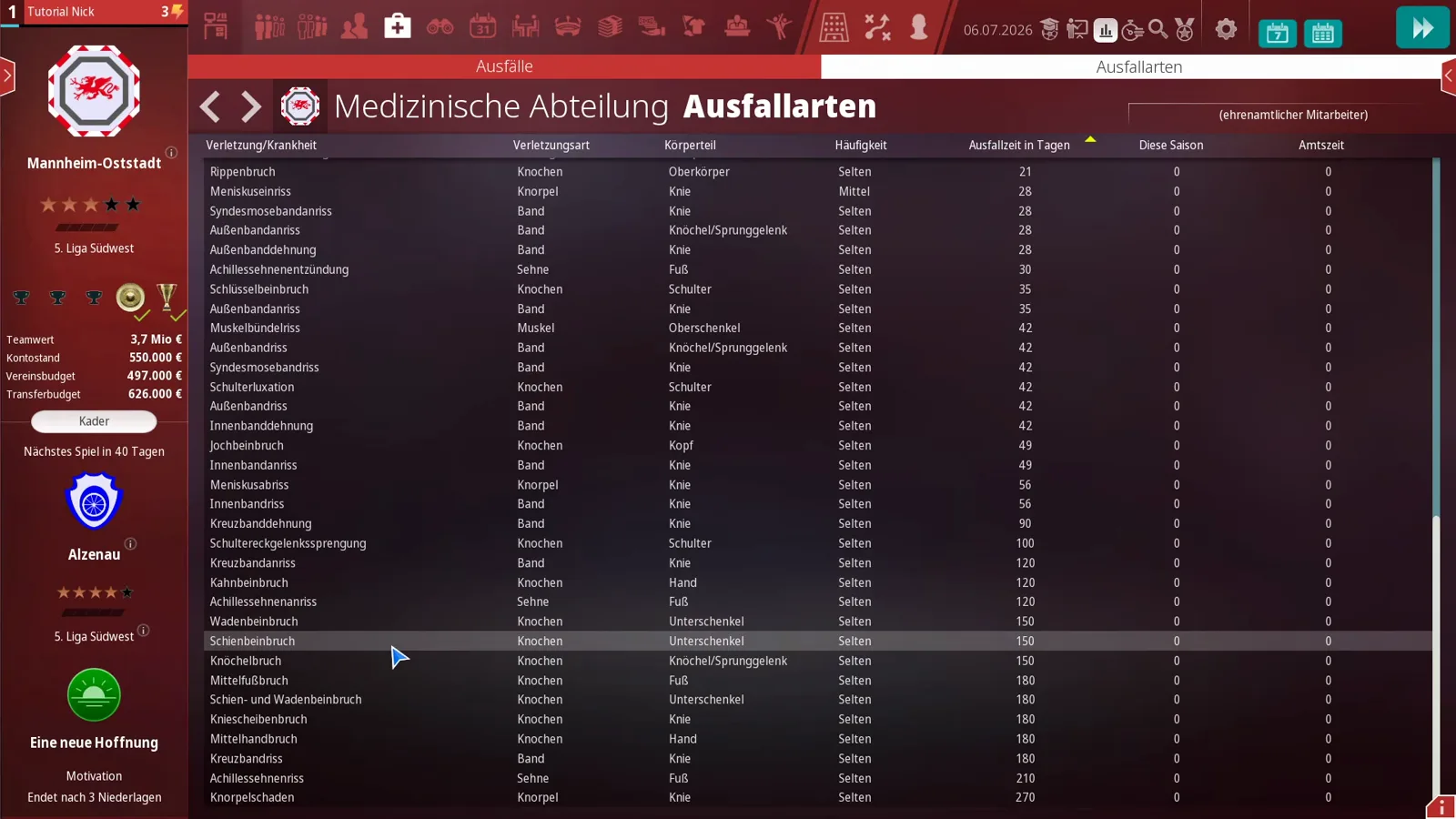
Which injuries sideline players the longest?
Can infrastructure reduce injuries before they happen?
Medical Department Overview
The Medical screen is your injury command center in WE ARE FOOTBALL 2027. It lists every unavailable player across the first and second teams with position, strength rating, injury type, prognosis, recovery progress, and whether you have already visited them.
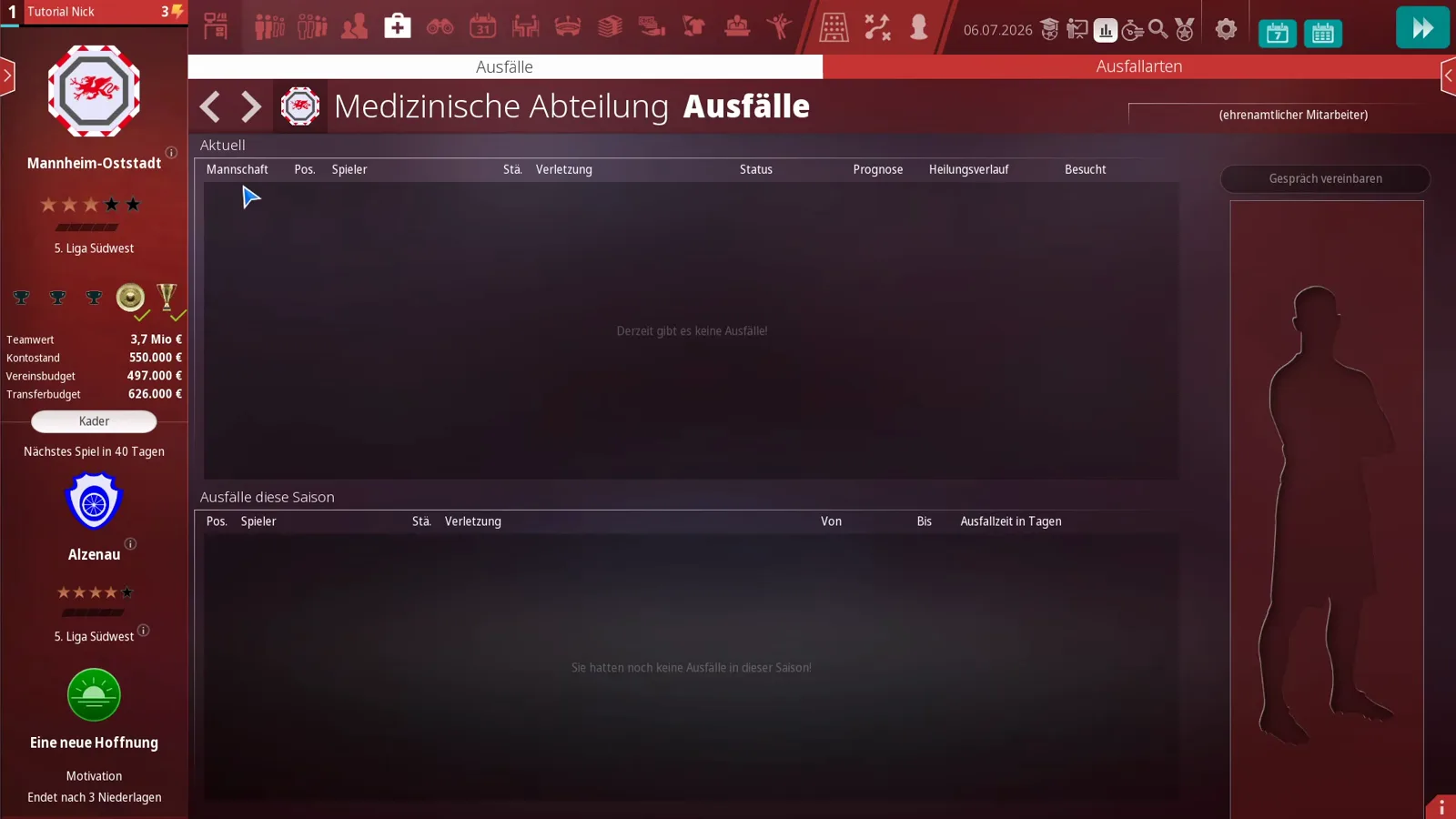
At the top sits your club doctor. A volunteer fills the role by default — hiring a better-qualified physician improves treatment outcomes across the entire squad. Treat medical staffing with the same priority as coaches in our /guides/beginner-guide/.
Injury Severity and Long-Term Impact
Not every knock costs the same number of weeks. Minor issues like bruises or short illnesses resolve quickly; structural damage can erase half a season or more.
Short absences (low concern)
Muscle bruises, minor knocks, and brief illnesses typically return within days. These rarely affect market value or development curves.
Season-altering injuries (critical)
Cruciate ligament ruptures, Achilles tendon tears, cartilage damage, and major bone fractures often sideline players for more than half a season. During that window:
- Level progression stalls or reverses.
- Resale value drops unless the player is very young with high potential.
- Squad planning must account for replacement signings or tactical reshapes — see /tactics/best-tactics-formations/ for emergency shape changes.
Injury susceptibility on the player file
Each profile displays an injury susceptibility bar. Elevated readings mean more frequent absences even with identical training load. Factor susceptibility into contract length and rotation priority, especially for aging squads.
Staff, Buildings, and Recovery Acceleration
Medical performance combines employee quality and club infrastructure. Neither alone covers a congested calendar.
Hire a stronger club doctor
Replacing the volunteer doctor is the fastest single upgrade. Better staff shorten prognosis bars on the medical screen and improve day-to-day recovery ticks.
Build prevention and rehab facilities
Two building lines matter:
- Injury-prevention facilities at the training ground reduce how often sessions produce new casualties.
- Rehabilitation buildings speed recovery once a player is already on the treatment table.
Stack both with upgraded medical staff before accepting a fixture list with mid-week European ties.
Visit injured players
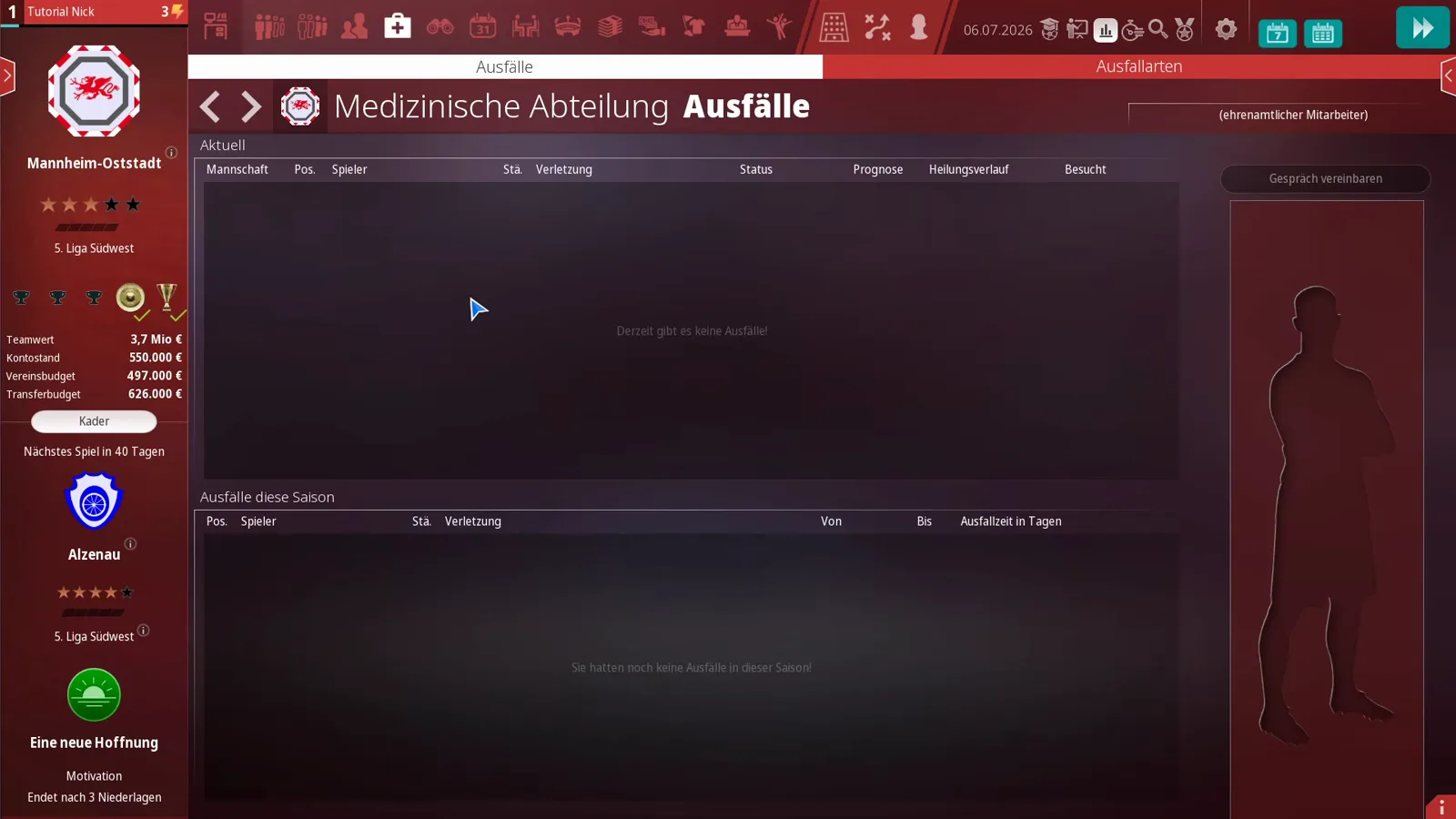
Use Arrange Meeting on the medical screen to wish players a speedy recovery. Visits register in the seasonal medical log and improve player relations — cheap morale insurance during long absences.
Fatigue, Rotation, and Congested Schedules
Injuries rarely happen in isolation. Training hardness, travel comfort, and calendar density all feed the medical report at season end.
Training intensity red lines
Players with high determination push through yellow satisfaction and orange tactical-training bars. Pair hard sessions with recovery days after league matches — the rotation rhythm described in /guides/beginner-guide/ keeps stamina out of the danger zone.
Rotate before the medical screen fills
During English weeks, bench four to five regular starters in cup or secondary-competition fixtures. Letting the same eleven absorb every mid-week match is the fastest route to muscle strains that appear on this screen two weeks later.
Travel and preparation (Organization screen)
The linked Organization panel controls travel class and days before the next match:
- Three-star travel keeps top players happy; one-star saves money but hurts mood.
- Two preparation days before the next fixture reduces stress compared to one-day turnarounds — but only matters when you schedule short training camps.
- Bus travel under ~400 km avoids the 2% fitness penalty and €5,000 same-day train fee that annoys squads.
Season events that reset morale
Once per season you can run team-spirit and satisfaction events (full-day appointments) when the squad shows sad smileys. Use them after injury crises or trophy droughts, not as a substitute for rotation.
For youth prospects returning from long layoffs, reintegrate gradually using the development paths in /talents/best-wonderkids-guide/.
Related Guides
guides
WE ARE FOOTBALL 2027: Beginner Guide & Tips
Essential beginner tips for WE ARE FOOTBALL 2027: Master pre-season schedules, coaching staff hierarchy, finances, training, and player contracts.
guides
WE ARE FOOTBALL 2027: Cheats & Creative Mode
Cheats, trainers, and Creative Mode sandbox in WE ARE FOOTBALL 2027: Infinite budgets, instant club takeovers, and savegame security guidelines.
guides
WE ARE FOOTBALL 2027: Contract Negotiations & Player Contracts
Master contract negotiations in WE ARE FOOTBALL 2027: release clauses, appearance bonuses, loyalty payouts, signing fees, and salary amendments.
Was this helpful?
Thanks for the feedback!